Silicone Hose for Automotive Workshops: A Buyer's Guide
Silicone Hose for Automotive Workshops: A Buyer's Guide
Silicone hose has quietly stopped being a motorsport part. It is now the default
replacement on any coolant or charge-air line a workshop wants to fit once and forget, and the
workshops making money on it are the ones treating it as stock rather than as a special order.
This is a buyer's guide rather than a spec sheet: what silicone is actually good
for, the one application it is genuinely wrong for, what belongs on a workshop shelf, and how to
size a replacement so it fits first time. Written for the person doing the buying, not the
fitting.
–50°C to +180°C13–83 mm bore1 m, coils & mouldings£500 min order (ex VAT)Express next-day
Why Workshops Move Customers Off Rubber
The pitch to your customer is durability. The pitch to your own P&L is
comeback rate. Both point the same way:
It outlives the rubber it replaces
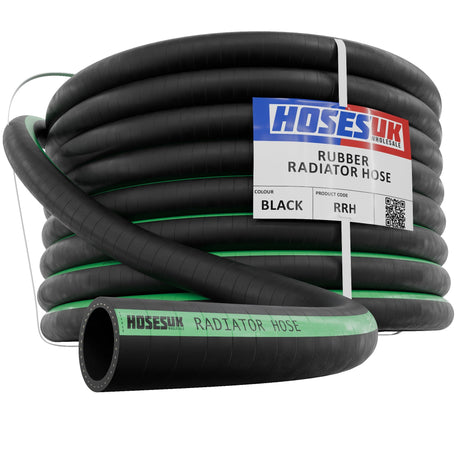
OEM rubber hardens, crazes and goes brittle from the inside as it heat-cycles. Multi-ply silicone with polyester reinforcement is rated –50°C to +180°C continuous and does not go chalky at three years old. On a fleet or a taxi contract, that is the whole argument.
Comebacks are the real cost
A coolant hose is a cheap part attached to an expensive job. If a customer is back on the ramp inside eighteen months, you have lost the labour twice and the goodwill once — which is why the part price is almost never the number that matters.
It resists what modern coolant does
OAT and hybrid coolant packages, plus ozone and UV in an open engine bay, are what finish rubber off. Silicone shrugs at coolant additives and does not perish sitting in stock.
Colour is a visible upsell
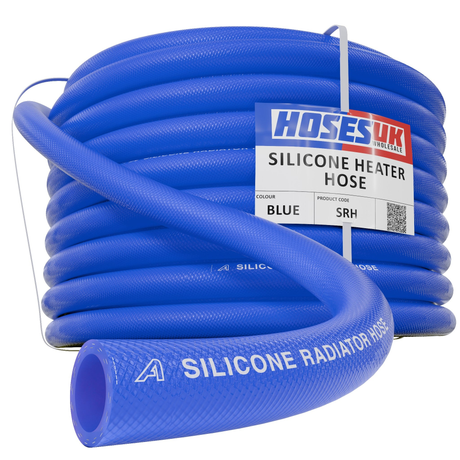
Coolant and heater lines come in blue, black and red. Black is the invisible OEM-look replacement; blue and red are a chargeable upgrade a customer can actually see under the bonnet. Same shelf, two price points.
It sits on the shelf indefinitely
Silicone does not have the shelf-life problem rubber does. Stock bought deep this quarter is still good stock next year — which changes what you can sensibly buy in one go.
What You Are Actually Buying
The commercially relevant facts about the silicone hoses, elbows and accessories, in one place, so you can
price and specify a job without opening six tabs:
Construction
Multi-ply silicone with internal polyester fabric reinforcement; smooth bore for unrestricted flow. Wire-reinforced versions add a steel helix for suction and vacuum duty.
Temperature
–50°C to +180°C continuous across the coolant, heater, hump and fuel/oil ranges. Silicone vacuum tubing is VMQ and rated –40°C to +200°C.
Bore range
Straight radiator hose runs 13 mm to 83 mm ID; fuel and oil hose starts at 6 mm; hump hose goes up to 102 mm for intercooler and turbo plumbing; vacuum tubing runs 2 mm to 10 mm.
Sizing convention
Everything is listed as internal diameter x outside diameter, so the wall thickness is there in the size code and your clamp range is a known number before you order.
Colours
Blue, black and red on coolant, radiator and heater lines. Fuel and oil hose is black only. Vacuum tubing adds platinum-cured clear alongside the peroxide-cured colours.
Formats
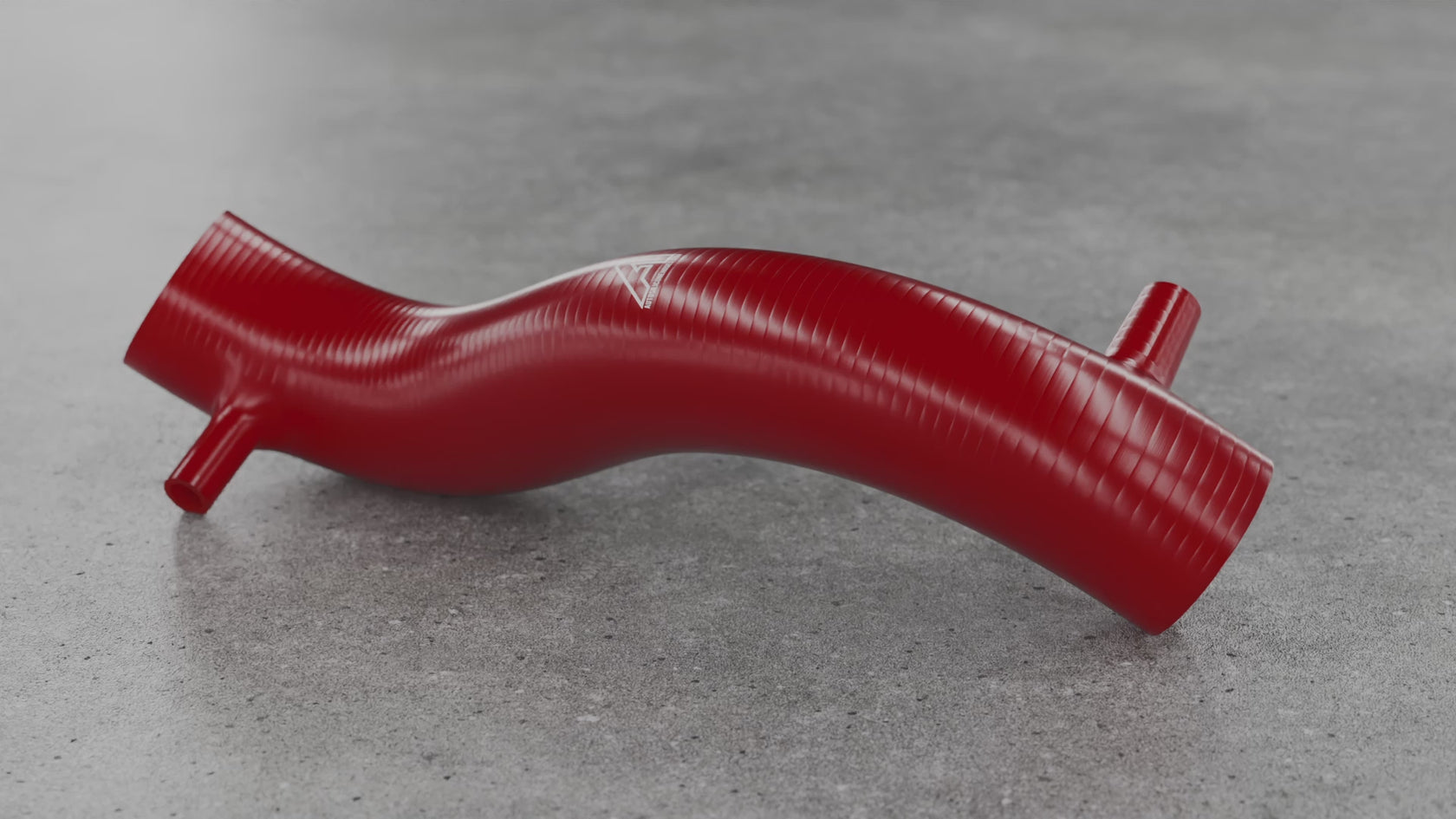
1 m straights; 45, 90, 135 and 180 degree elbows; reducing elbows; straight reducers; T-pieces; hump hose; end caps; and continuous coils for the fast movers.
Coil lengths
Coolant hose in 5 m and 20 m coils, heater hose in 50 m, vacuum tubing in 30 m. Coils are the wholesale unit and the better per-metre rate.
Fuel and oil
Only the fluorosilicone-lined range is specified for fuel, oil and hydrocarbons. Standard silicone is not.
Fixings
T-bolt clamps for boost and high-load joints, worm drive clips for general coolant work, mini clips for small-bore fuel and vacuum lines.
The One Thing Silicone Is Wrong For
Standard silicone is not fuel resistant. Not marginally, not "fine for a while"
– hydrocarbons swell and degrade it, and a swollen fuel line is a fire risk, not a warranty
claim. Anything carrying petrol, diesel, oil or hydrocarbon vapour needs the fluorosilicone-lined
hose: a fluorosilicone inner core doing the chemical resistance, high-temperature silicone outer
layers and fabric reinforcement doing the pressure and heat.
If it carries coolant, air or water, standard silicone. If it carries fuel or oil, fluorosilicone-lined — every time.
It is worth making that a rule on your parts desk rather than a judgement call,
because the two look almost identical on a shelf and the fluoro-lined range is stocked in black
only. Bin them separately and the mistake stops happening.
What Belongs on a Workshop Shelf
You are buying to avoid two things: a vehicle sitting on a ramp waiting for a
part, and cash tied up in bores you touch twice a year. That balance lands in roughly five
groups across the automotive hose range:
Straights, by the metre
The workhorse. 13–38 mm covers the overwhelming majority of car and light commercial radiator and top/bottom hose work. Buy the popular bores in black plus one colour, and take continuous coil on anything you cut weekly.
Elbows in the common bends
45 and 90 degree elbows do most of the work; 135 and 180 cover the awkward routing that otherwise turns into a two-hour fabrication job. Stock them shallow and wide — it is the range that gets you out of trouble, not the depth.
Reducers, T-pieces and joiners
Straight reducers and reducing elbows are how you finish a non-standard route without waiting on a bespoke part. Add T-pieces for expansion and bypass tie-ins, and aluminium or plastic joiners for the joins in between.
Fuel, oil and vacuum
Fluorosilicone-lined hose for anything carrying fuel or oil, and small-bore vacuum tubing for the vacuum and breather lines that perish first. Both are cheap to stock and expensive to be without on a Friday afternoon.
Clamps to match
Nothing kills a good hose faster than the wrong clamp. Carry T-bolt for boost joints and worm drive for general coolant, sized off the outside diameter of the hose you have actually stocked.
Deep on the common bores, shallow and wide on the mouldings, clamps sized to the hose you actually stock — that shelf covers most of a workshop's coolant work without tying up cash.
Sizing a Replacement Right First Time
Most of the returns we see on silicone are sizing errors, not product faults.
Five steps and they largely disappear:
1
Measure the bore, not the hose
Every size on the range is internal diameter first. Measure the spigot or stub the hose goes over, not the old hose, which has usually swollen or crept.
2
Read the OD off the size code
The listed outside diameter tells you the clamp band you need and whether it will clear the surrounding loom or bracket. Check it before you pick the part, not on the ramp.
3
Match reinforcement to duty
Standard multi-ply for pressurised coolant and heater lines; wire-reinforced where the line sees suction, vacuum or a tight bend that would otherwise collapse; hump hose where the joint has to absorb engine movement.
4
Get the compound right
Coolant, air and water on standard silicone. Fuel, oil and anything hydrocarbon on the fluorosilicone-lined range. This is the one that is not a preference.
5
Set the colour policy up front
Decide whether black is your default OEM-look replacement and colour is the chargeable upgrade. It stops you accidentally stocking three colours of everything and tying up cash in the wrong places.
Vehicle Kits and Bespoke Work
Alongside the cut lengths and mouldings there are vehicle-specific coolant and
induction kits – the usual suspects, including the MINI Cooper S R53, Ford Fiesta ST150, Land
Rover Defender 300TDI and Mazda MX5 MK1. For a workshop with a specialism, or a customer base that
skews to one platform, a kit is a single line on an invoice instead of nine, and it prices as a job
rather than a bag of parts.
Beyond that, hose can be made to your own drawing. Bespoke work is quoted per job
against a technical drawing giving bore, wall, length, and the temperature and pressure duty –
the more complete the brief, the faster and sharper the quote. If you are a reseller rather than a
fitter, the same route covers custom-branded hose carrying your own name.
Buying It at Trade Prices
Hoses UK is wholesale-only, and prices are published openly on the product pages
— no login wall, no application, no quote request between you and the rate. The minimum order is
£500 excluding VAT across the catalogue rather than per line, so the sensible pattern is to
batch a month of consumables into one delivery rather than drip-feeding small orders. New trade
customers take £25 off their first order.
Every order is pro-forma, settled before dispatch. No credit checks, no
application to wait on and no approval stage that can hold up an urgent line: the order is paid and
it is picked. Running without a debtor book is exactly what funds sharper pricing and deeper stock
on the shelf at Mirfield – which, when a car is on your ramp, is worth considerably more to you
than terms.
Stock Up Your Hose Shelf
Wholesale rates are on the page. Open a trade account, take £25 off your first order, and get stocked lines out on express next-day delivery — or collect the same day from Mirfield.
Can I use standard silicone hose for fuel or oil lines?
No — and it is the most common and most expensive mistake made with silicone. Standard silicone is excellent on coolant, water and charge air, but hydrocarbons attack it. For fuel, oil or anything petroleum-based you need the fluorosilicone-lined range, which uses a fluorosilicone inner core with high-temperature silicone outer layers and fabric reinforcement. It is stocked black, from 6 mm bore upwards, alongside the rest of the silicone hose range. If a line carries fuel, specify the fluoro-lined part.
What sizes should a general workshop actually stock?
For car and light commercial work the 13–38 mm bores cover most radiator, top, bottom and heater hose jobs, so that is where depth pays. Above that you are into commercial, plant and boosted applications, where hump hose runs up to 102 mm. The sensible pattern is deep on the common bores in black, one colour alongside it, and a shallow but wide spread of 45 and 90 degree elbows and reducers so you are never held up by an awkward route.
Is it cheaper to buy 1 metre lengths or a continuous coil?
If you cut the same bore more than about once a week, the coil wins. Continuous silicone coolant hose is supplied in 5 m and 20 m coils and heater hose in 50 m, and the coil is the unit the wholesale rate is built around — every time somebody else breaks it for you, the handling is priced in. Buy the coil for your fast movers, keep 1 m straights for the bores you touch occasionally.
How does buying through Hoses UK work for a workshop?
It is a trade-only wholesale account. Wholesale prices are published openly against the products — no login wall and no quote request — the minimum order is £500 excluding VAT across the catalogue, and new trade customers get £25 off their first order. Every order is pro-forma, settled before dispatch: no credit checks, no application and nothing sitting between your order and the picking list. Stocked lines go out on express next-day delivery, or you can collect the same day from Mirfield in West Yorkshire.
Regular priceFromChoose options to view priceex VAT
/
Unavailable
Wholesale Minimum Order Value
Please note that this website is for wholesale and trade customers only. A minimum order value of £500 (ex. VAT) applies to all orders placed through this site.