Forecasting is not really a modelling problem. For most trade buyers it is a much simpler question asked properly: which lines actually move, how fast, and how long does it take to get them back on the shelf. Get those three right and the spreadsheet almost writes itself.
Get them wrong and you end up in the familiar place – capital tied up in sizes nobody asks for, while the one bore a customer needs today is on back order. This is a practical method for buyers of hose, ducting and fittings, written for the person who has to sign the purchase order rather than for a planning department.
Forecast in units, not spendReorder point beats a diary dateRound to the coil£500 min order (ex VAT)Next-day on stocked lines
Five Ways a Hose Forecast Goes Wrong
Before the method, the failure modes. Almost every bad hose forecast is one of these five, and they are all cheap to fix:
Forecasting in money, not units
Spend says what a line cost you, not how fast it left the shelf, and a price change distorts it completely. Forecast in metres, coils and pieces.
Averaging across the whole range
A handful of sizes carry most of your movement. Averaging them with the long tail gives a number that is wrong for both – too much buffer on the slow lines, not enough on the fast ones.
Ignoring the buying unit
You cannot order 42 m of a hose sold in 30 m coils. A forecast that does not round to the supply unit will not survive contact with the order form.
Treating lead time as one number
Stocked lines and bespoke work sit on different clocks. Applying an ex-stock lead time to a made-to-order item is the most reliable way to run out.
Forecasting from what you sold
What you sold was capped by what you had. Every stockout is demand that never reached the history, so sales-only forecasts quietly re-order last year's shortage.
A Working Method, in Five Steps
None of this needs software. A spreadsheet, twelve months of usage and an hour will get you most of the value available:
1
Split movers from tail
Rank every line by units shifted over the last twelve months. The top slice earns real buffer stock and a formal reorder point; the tail gets ordered against jobs, or dropped.
2
Get a clean rate of sale
Take twelve weeks of usage on each mover and strip out anything exceptional – a one-off contract, a fleet refit. What is left is your baseline weekly rate.
3
Set the lead time honestly
Two figures, not one: ex-stock replenishment for the catalogue lines, and a realistic quoted lead time for anything bespoke or custom-branded.
4
Work out the reorder point
Average weekly usage — multiplied by the lead time in weeks — plus a buffer for the weeks that run hot. That number, not a calendar date, is what triggers the order.
5
Round to coils and to the minimum
Convert the answer into whole coils and lengths, then group lines together so the order clears the £500 minimum in one go rather than three part-orders.
The step that gets skipped is the fourth one. Plenty of businesses forecast reasonably well and then order on a monthly rhythm anyway, which throws the forecast away. A reorder point converts the number into a decision.
A forecast you never turn into a reorder point is just a report. The number that matters is the stock level at which the order goes in.
The Buying Unit Is Part of the Forecast
Hose is not supplied in whatever length the forecast produces. Each range across the hose range has its own supply unit, and that unit sets how finely you can plan it – so it belongs in the calculation rather than being applied afterwards:
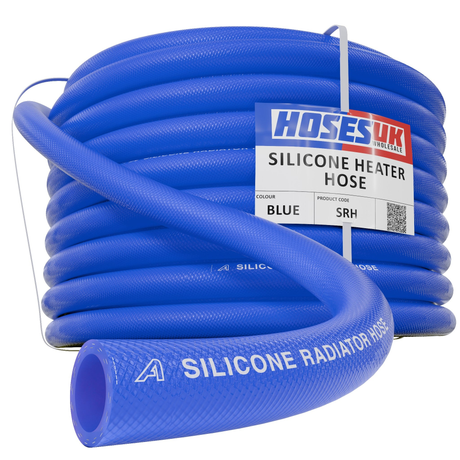
| Silicone radiator hose |
1 m lengths, so the forecast is a straight piece count – the easiest range to plan finely across a lot of bores and colours. |
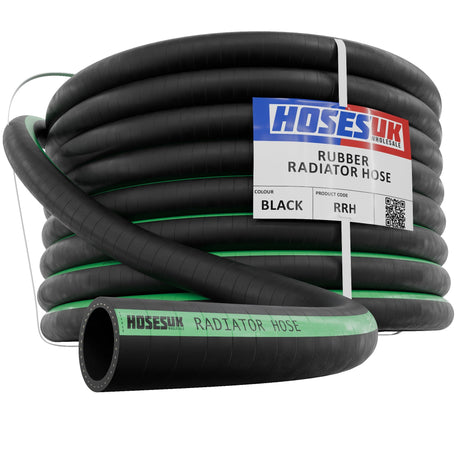
| Rubber radiator hose (EPDM) |
1 m lengths and 20 m coils. Choosing between them is itself a forecasting decision: coils cost less per metre but commit you to a size. |
| Rubber air line |
60 m coils – a large commitment per order line, so it rewards knowing your true annual usage. |
| PVC clear braided |
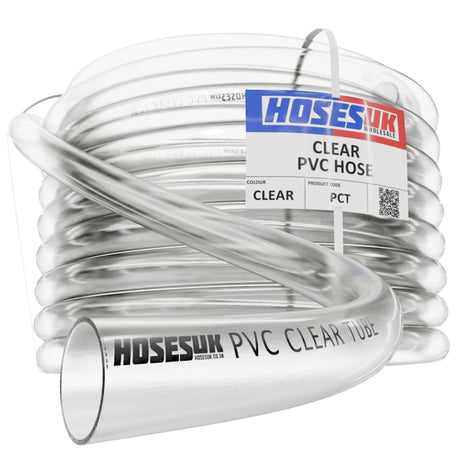
30 m coils. Used across several sectors at once, which usually makes its demand steadier than the sector-specific lines. |
| PVC wire reinforced |
50 m and 100 m coils. Stepping up to the larger coil only pays if the usage is genuinely there. |
| PVC layflat |
100 m coils, and strongly seasonal on dewatering and irrigation work – annual usage divided by twelve is the wrong way to plan it. |
The trade-off is consistent: the shorter the supply unit, the closer you can track demand and the less capital sits idle, while the longer coil buys a better rate per metre in exchange for a larger bet on one size. On proven fast movers, take the coil. On anything you are unsure of, buy short and prove the demand first.
Demand Behaves Differently by Sector
If you serve more than one sector, forecast them as separate streams and add them together. Blending them into a single average hides exactly the peaks you need to see coming:
Automotive workshops
Steady week to week, with a cold-weather lift as coolant and heater hose failures climb. Consumables such as
clamps and clips move faster than the hose and stop more jobs.
Construction & groundworks
Project-shaped rather than seasonal. Demand arrives in blocks as sites mobilise, so the useful signal is your order book, not last month's usage.
Agriculture
The most sharply seasonal of the four. Spraying, slurry and harvest windows concentrate demand into a few weeks, and a stockout inside that window is not recoverable.
Resellers & stockists
Your demand is your customers' demand plus your own shelf. Forecast the sell-through and hold display stock separately, or the two net each other off.
Let Supply Do Some of the Work
The other half of the equation is how quickly stock can be replaced, because short, dependable lead times let you carry a thinner buffer for the same service level. Where the wholesale catalogue is held ex-stock, replenishment is express next-day, with same-day collection from Mirfield when a job will not wait. That is weeks of safety stock you no longer have to fund.
It also means a forecast that turns out to be wrong is a recoverable mistake rather than an expensive one. The exception is bespoke and custom-branded hose, which is made to your spec and quoted per job: that needs planning against a quoted lead time and a committed pipeline, not against a rate of sale.
Forecast It, Then Buy It at Trade
Frequently Asked Questions
How much sales history do I need before I can forecast hose demand?
Twelve weeks of clean usage is enough to set a working reorder point on your fast-moving lines, and far better than ordering on instinct. Twelve months is what you need before you can trust the seasonal shape – a quarter of data will not tell you whether a layflat line peaks in spring or autumn. Starting from nothing, take the twenty or thirty lines you reorder most often, log usage weekly, and buy the tail against jobs while the seasonal picture builds.
How do I set a reorder point for a fast-moving hose line?
Multiply average weekly usage by the lead time in weeks, then add a buffer for the weeks that run hot. If you use 40 m a week, replenishment is next-day on a stocked line and you want a fortnight of cover behind it, you are holding roughly 90 m and reordering when you hit it – four coils on the shelf at 30 m a coil. The point is to replace a date in the diary with a stock level that triggers the order.
Does the £500 minimum order change how I forecast?
It changes how you group the order rather than how you forecast the demand. Work out the reorder point line by line as normal, but review the whole basket together on a regular cycle, so that when one fast-moving line trips its trigger you top up everything else that is approaching its own. Ordering at basket level rather than line level means you clear the £500 minimum (excluding VAT) naturally, in one delivery, instead of splitting into part-orders. Every order is pro-forma, settled before dispatch — no credit checks and no application stage — and stocked lines go out on express next-day delivery or collect the same day from Mirfield.
How do I forecast bespoke or custom-branded hose?
Differently, and separately. Bespoke and own-brand hose is made to your specification and quoted per job, so it does not behave like a stocked line with a rate of sale – it behaves like a programme with a lead time. Forecast it from your committed pipeline rather than from history, and hold a stocked equivalent as cover if it is a line you cannot be without. Call the team on 01924 496111 with quantities and timings for a lead time you can plan against.