Silicone vs Rubber vs PVC vs PTFE: Choosing Hose for Bulk Orders
Silicone vs Rubber vs PVC vs PTFE: Choosing Hose for Bulk Orders
Four materials cover very nearly everything a trade counter sells: silicone, rubber,
PVC and PTFE. They overlap enough that a buyer can substitute one for another and get away with it for
a while – and differ enough that the substitution eventually costs somebody an engine, a pump or a
morning. For anyone placing a bulk order, the question is not which material is best. It is which
material each duty actually requires, and how much of each to hold.
This guide sets the four side by side on the specifications that decide the sale
— temperature range, reinforcement, standards and format — then covers how to translate that into
a stock order that turns over rather than sits.
SiliconeRubberPVCPTFE3:1 safety factor£500 min order (ex VAT)
The Four Materials at a Glance
Every line we hold carries a 3:1 safety factor, so in each case specify against the
working figures below rather than the burst pressure. The full hose range covers all four families.
Silicone
Polyester-braided multi-ply silicone to SAE J20R3. –50°C to +250°C on coolant and radiator lines; heater hose –30°C to +200°C. Fluorosilicone-lined versions to SAE J30R6 for fuel and oil. Two-ply silicone air ducting runs –70°C to +310°C (peak +350°C).
Rubber
EPDM radiator and heater hose to SAE J20R3, –30°C to +125°C (peak +145°C). NBR/SBR multi-purpose to ISO 73379, –20°C to +100°C. Textile-braided air line to ISO 5774:2016 Type B, –20°C to +80°C. Marine fuel delivery to BS EN ISO 7840.
PVC
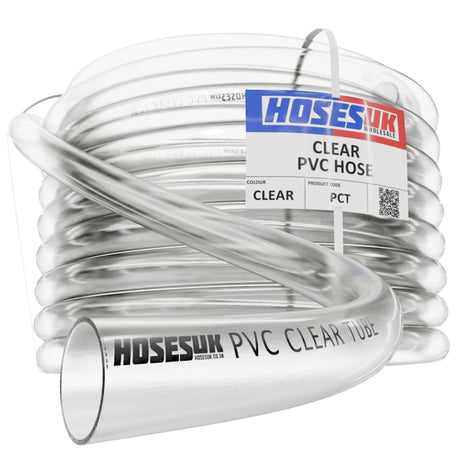
Clear polyester-braided to ISO 5774:2016 Type A, –10°C to +65°C (short-term +70°C), 5x9mm to 51x58mm in 30m coils. Wire-reinforced suction 10x16mm to 51x65mm in 50m and 100m coils. Corrugated to BS EN ISO 3994-2001, 19mm to 50mm.
PTFE
Smooth-bore PTFE inner tube with SS304 stainless overbraid, or a nylon intermediate braid under stainless. –56°C to +204°C operating, peak +210°C. Non-stick bore, near-universal chemical compatibility, the highest pressure capability of the four.
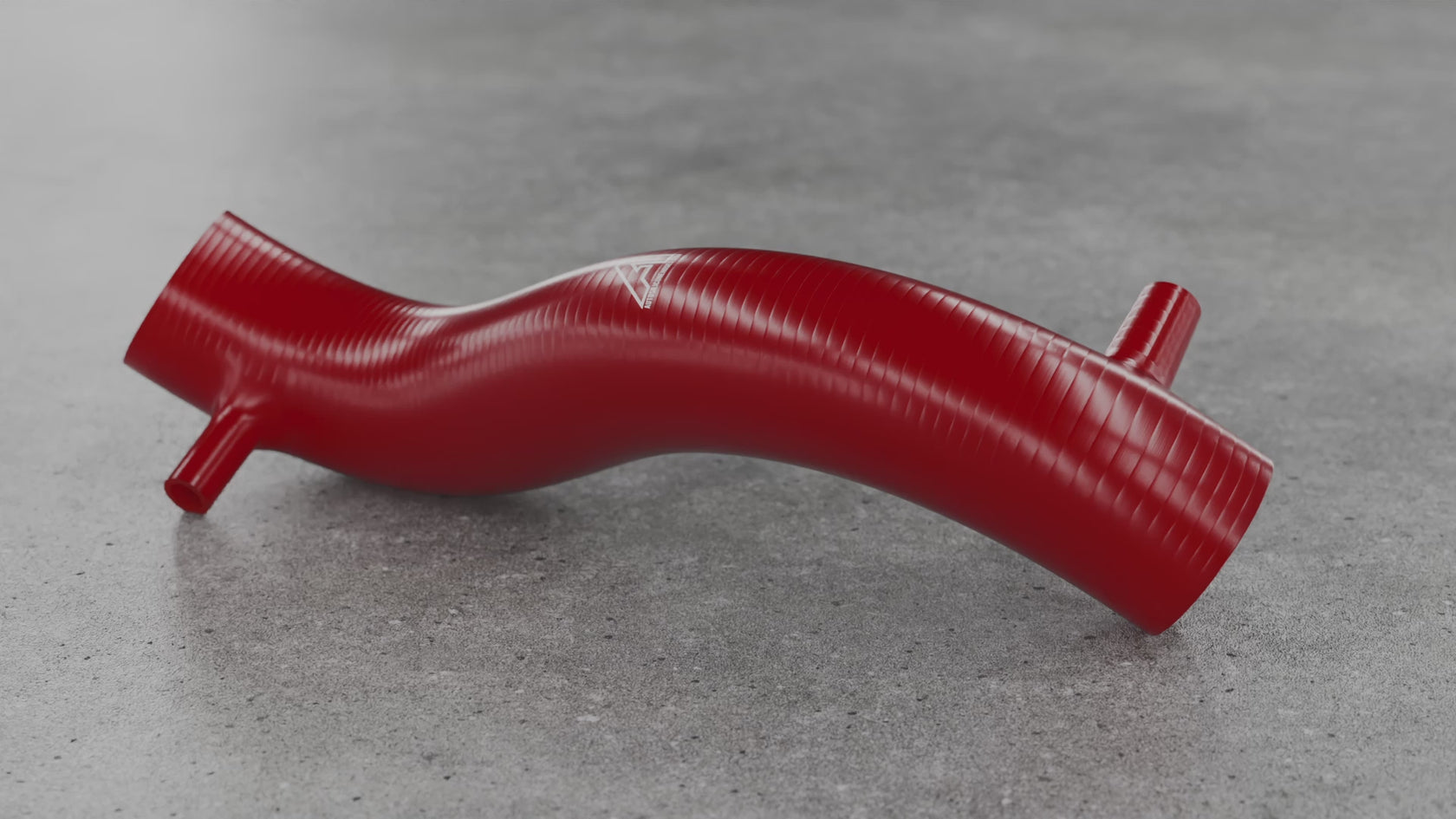
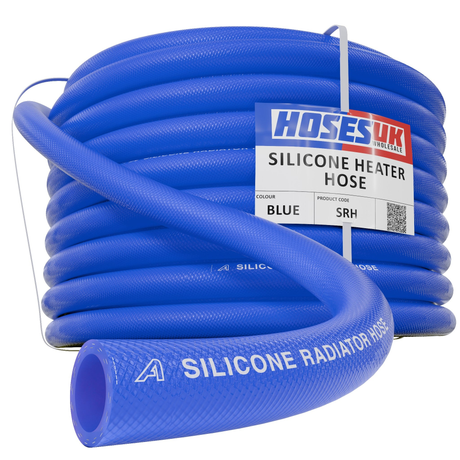
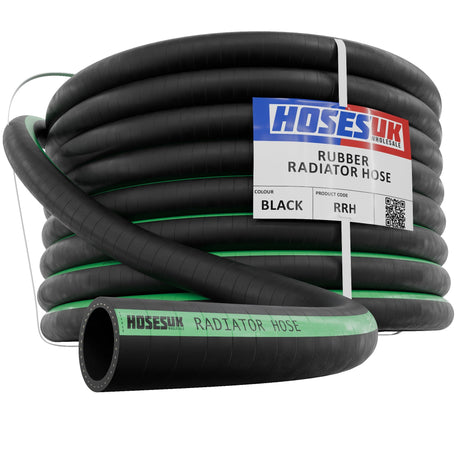
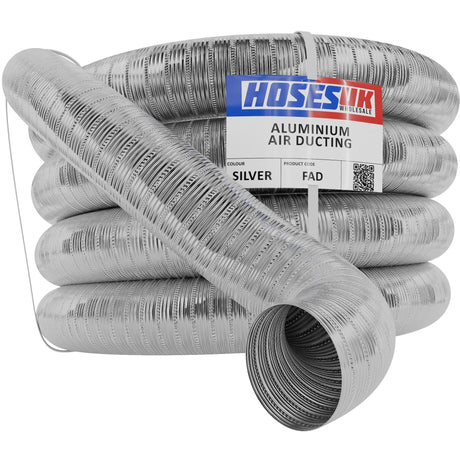
Left to right: reinforced silicone, rubber, clear braided PVC and stainless-overbraided PTFE — the four families that cover almost every trade duty.
Matching Material to Duty
Most specification errors happen because somebody chose on habit rather than on
fluid. Four duties account for the overwhelming majority of trade demand:
Engine coolant & heat
Silicone first, EPDM rubber second. Silicone holds its shape and its seal for far longer at temperature — which is why it is the upgrade path off OEM rubber rather than a like-for-like.
Fuel, oil & hydrocarbons
Plain silicone is the wrong answer here. Specify fluorosilicone-lined silicone (SAE J30R6) or nitrile rubber; for aggressive fluids and high pressure, PTFE.
Air, water & general transfer
PVC and rubber own this. Clear braided PVC for visible flow and light chemical work, rubber airline where the hose gets dragged, kinked and left outdoors.
Chemical & high pressure
PTFE lined, stainless overbraided. Nothing else in the catalogue combines the chemical resistance, the temperature range and the burst strength in one line.
Standard silicone is not fuel-safe. For petrol, diesel or mineral oil you need a fluorosilicone-lined silicone to SAE J30R6, a nitrile rubber line, or PTFE.
Where Silicone Earns Its Premium
Silicone costs more per metre than EPDM rubber, and a buyer looking only at the
line price will substitute every time. The argument for silicone is service life at temperature.
Rubber radiator hose is rated to +125°C with a +145°C peak, which is fine until a cooling
system runs hot, a fan fails, or the hose spends five summers under a bonnet. Multi-ply silicone to
SAE J20R3 sits at +250°C peak and does not harden, craze or collapse internally the way an aged
rubber hose does. On a fleet or a plant contract, one avoided roadside failure covers the difference
across the whole order.
The counter-argument is equally real: for straightforward like-for-like OEM
replacement on older machinery, rubber is the right part at the right price, and customers will not
thank you for upselling them. Stock both. They are different sales.
Where PVC Stops and PTFE Starts
PVC is the cheapest per metre and the widest-selling of the four, but its ceiling is
low: +65°C, +70°C short-term. That is a water, air and mild-chemical material, not a hot or
aggressive one. The PVC hose lines run from 5mm bore pole hose up to 51x65mm wire-reinforced suction, and for
workshop air, washdown, irrigation and dewatering they are unbeatable on cost.
At the other end, PTFE lined hose is the specialist line: a seamless smooth PTFE bore with
an SS304 stainless overbraid, rated –56°C to +204°C with a +210°C peak, and effectively
inert to solvents, fuels, hydraulic fluids and steam. It is the most expensive metre in the catalogue
and the one your customer cannot source at a builders' merchant, which makes it a margin line rather
than a volume line. A modest holding in the common bores tends to pay for itself.
Reading the Spec Sheet
The working figures for the core lines, as they appear on the product pages:
Silicone Coolant Hose
Multi-fabric cord layers, SAE J20R3. –50°C to +180°C, peak +250°C. Sold per metre. The default for engine coolant and high-temperature water transfer.
Silicone Fuel & Oil Hose
Fluorosilicone inner, polyester braid, SAE J30R6. –50°C to +250°C. Sold per piece. The only silicone that belongs anywhere near a hydrocarbon.
Rubber Radiator Hose
Heat-resistant EPDM tube, high-tensile fibre yarn, SAE J20R3. –30°C to +125°C, peak +145°C. Sold per metre. The volume line for fleet and agricultural cooling.
Rubber Multi Purpose Hose
Oil-resistant NBR tube, high-tensile fabric layers, ISO 73379. –20°C to +100°C, peak +120°C. Air, water, fuel and light oils off a single line.
PVC Clear Braided Hose
Soft PVC with triple polyester yarn, ISO 5774:2016 Type A. –10°C to +65°C. 5x9mm to 51x58mm, 30m coils. Transparent, so a blockage is visible.
PVC Wire Reinforced Hose
Galvanised steel-wire helix between clear PVC walls. –10°C to +65°C. 10x16mm to 51x65mm, 50m and 100m coils. The suction-side answer in PVC.
PTFE Stainless Overbraid Hose
Seamless smooth PTFE bore, SS304 stainless wire braid. –56°C to +204°C, peak +210°C. Sold per metre. Chemical transfer, hydraulics, motorsport fluid systems.
Specifying a Bulk Order – Step by Step
1
Name the fluid
Coolant, fuel, oil, air, water, chemical. This single answer removes two of the four materials before you have looked at a price.
2
Take the worst-case temperature
Not the average. Under-bonnet, in-season, mid-afternoon. Then check it against the operating range, not the peak figure.
3
Decide pressure or suction
Suction needs a wire helix or a stainless braid. A braided line will collapse under vacuum no matter how good the pressure rating looks.
4
Set the format
Coil or moulding, metre or piece. Get this right and your reorder points look after themselves for the next twelve months.
Buying Across Four Materials
A single-material stockholding is easy to manage and loses sales. A four-material
holding wins the sales and ties up cash if you buy it badly. The middle ground looks like this:
Price per metre vs price per piece
Continuous lines — coolant hose, PVC, rubber, PTFE — are priced per metre and sold by the coil. Mouldings — elbows, reducers, radiator hoses — are priced per piece. Two very different reorder rhythms, and worth separating on your stock sheet.
Standardise the bore, widen the material
Most buyers over-range on sizes and under-range on materials. Three or four bores across a material family covers the majority of jobs; a missing material family loses you the sale entirely.
Buy full coils
Coil lengths are fixed by line: PVC braided is 30m, wire-reinforced PVC is 50m or 100m, corrugated is 30m or 50m. Ordering complete coils is what makes the per-metre rate work.
Mind the shelf life of the cheap stuff
PVC is the lowest cost per metre and the most likely to sit. Rubber and silicone turn faster per pound of stock in most trade counters because they replace failed OEM parts, not spares.
Ordering from Hoses UK
Hoses UK is a trade-only wholesale distributor, so pricing is built for volume rather
than one-off retail. The minimum order is £500 excluding VAT, and every order is
settled before dispatch — there is no credit application to wait on and no credit check to pass,
which is precisely what lets us price sharper and hold deeper. Core lines across all four materials
ship on express next-day delivery, with same-day collection from our
Mirfield warehouse. For stockists building an own-brand range, custom-branded and bespoke hose is
available alongside the standard catalogue.
Open a trade account, take £25 off your first order, and stock all four materials at wholesale.
Which hose material should we stock for engine coolant?
Silicone, with EPDM rubber behind it. Multi-ply polyester-braided silicone is built to SAE J20R3 and runs –50°C to +250°C on radiator and coolant lines, against –30°C to +125°C for EPDM rubber radiator hose. Rubber remains the right call for like-for-like OEM replacement on older fleet and agricultural machinery; silicone is what customers buy when they want the line to outlast the vehicle.
Can we use standard silicone hose for fuel or oil?
No. Standard silicone swells and degrades in contact with petrol, diesel and mineral oils. For hydrocarbons you need either fluorosilicone-lined silicone — built to SAE J30R6 with a smooth extruded fluorosilicone inner core — or a nitrile (NBR) rubber line. This is the single most common specification error we see on trade orders, and it is an expensive one.
What is the difference between braided and wire-reinforced hose?
A braid (polyester yarn or stainless wire) raises the burst pressure but does nothing to stop the hose collapsing inwards. A wire helix resists vacuum. If the hose sits on the suction side of a pump, specify a helix — our wire-reinforced PVC runs 10x16mm to 51x65mm in 50m and 100m coils for exactly this. On the delivery side, a braid is the lighter and cheaper answer.
What is the minimum order, and how do we pay?
The minimum order is £500 excluding VAT. Hoses UK is pro-forma: every order is settled before dispatch, so there are no credit checks and no account application to wait on. That is a deliberate choice — it is what funds sharper pricing and deeper stockholding. New trade customers get £25 off their first order, and core lines ship on express next-day delivery.
Regular priceFromChoose options to view priceex VAT
/
Unavailable
Wholesale Minimum Order Value
Please note that this website is for wholesale and trade customers only. A minimum order value of £500 (ex. VAT) applies to all orders placed through this site.