EPDM, NBR & Silicone: Rubber Grades for Trade Buyers
EPDM, NBR & Silicone: Rubber Grades for Trade Buyers
Ask ten trade buyers what they are ordering and nine will say "rubber hose". What they are actually buying is a polymer with a very specific job. Get it right and the hose outlives the machine it is fitted to. Get it wrong and it swells, hardens or splits, and the cost lands on you long before it lands on the end user – in returns, in warranty argument, and in a customer who quietly buys the next one somewhere else.
Three compounds cover most of what moves through a distributor's racking: EPDM, NBR (nitrile) and silicone. They are not interchangeable and they do not cost the same. Here is what each is genuinely good at, where it fails, and how to hold the right mix without tying up capital in stock that turns twice a year.
EPDMNBR / nitrileSiliconeSAE J20R33:1 safety factorNext-day from Mirfield
Three compounds, three jobs
The short version: EPDM is the coolant and weathering material, NBR is the hydrocarbon material, silicone is the heat and longevity material. Almost every mis-spec we see is somebody using one where another belongs.
EPDM – coolant, water and weather
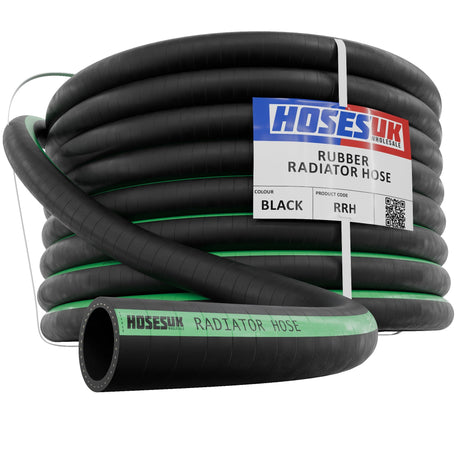
An ethylene propylene compound that shrugs off heat, ozone, UV and coolant chemistry. In our rubber hose range it is the tube on the Rubber Radiator Hose and Rubber Heater Hose, both built to SAE J20R3. The catch is absolute: put petrol, diesel or mineral oil through EPDM and the tube swells.
NBR – fuel, oil and gas
The hydrocarbon specialist, and the tube on every fuel line we stock: the SAE 30R7 fuel filler hose, the BS EN ISO 11424 unreinforced fuel and oil hose, the ISO 3821 / BS 3212-2 LPG hose. General-purpose lines run an NBR/SBR blend. Strong on fluids, less happy with years of direct sunlight.
Silicone – heat, flex and service life
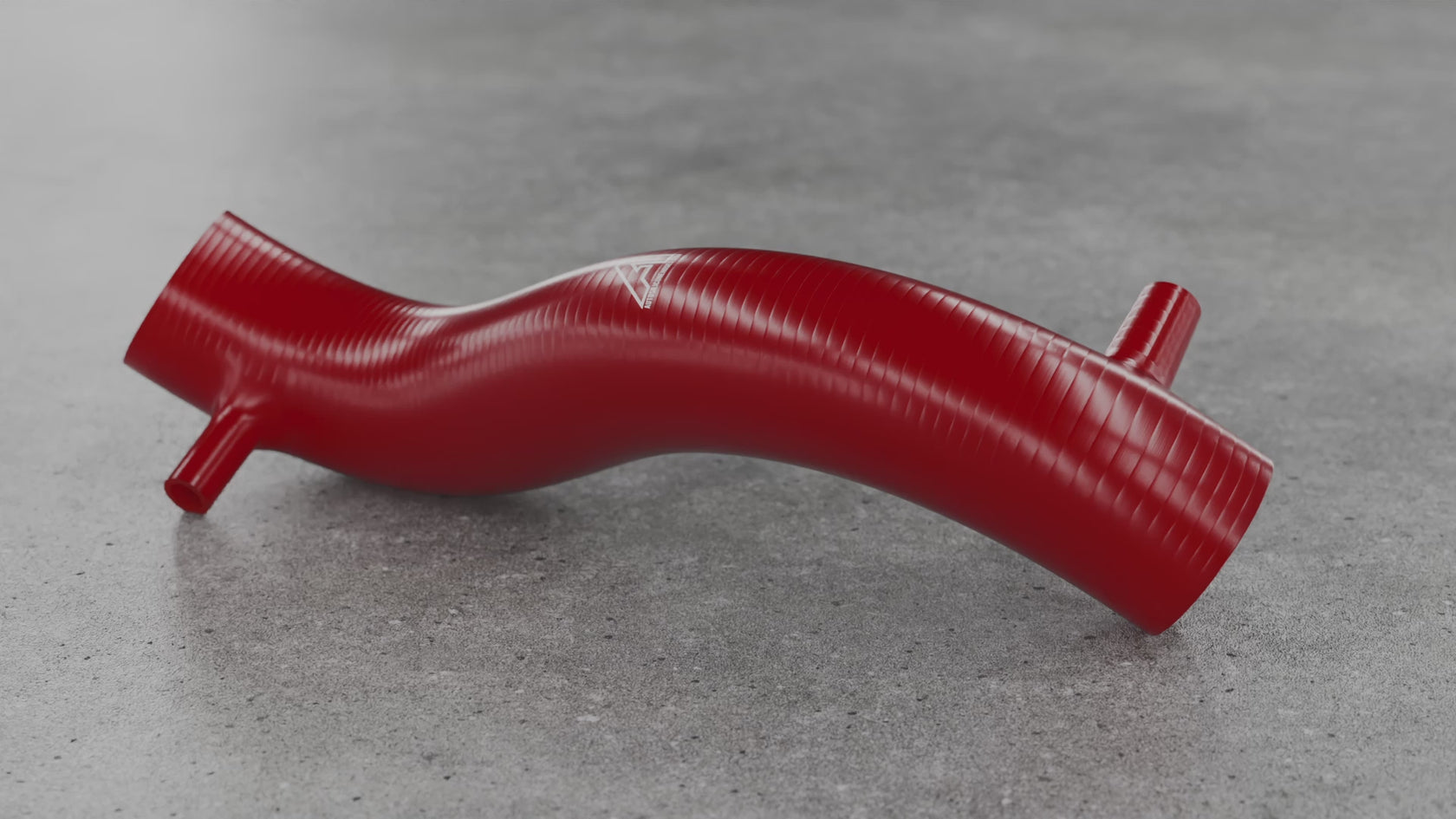
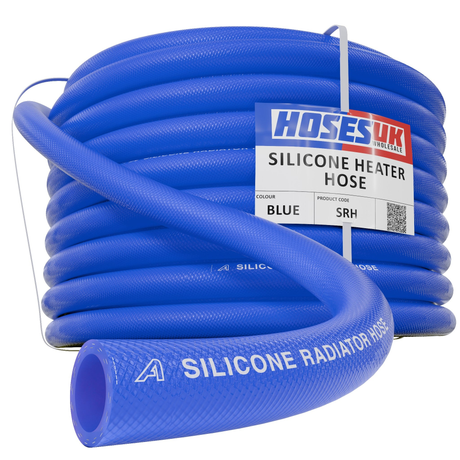
The premium option, priced accordingly. Silicone holds its flexibility and colour where rubber has gone hard and chalky, which is why it dominates engine bays and turbo pipework. Standard silicone is not a fuel material – that duty needs the fluorosilicone-lined SAE J30R6 build in the silicone hose range.
The same three jobs, three compounds: EPDM for coolant and weather, NBR for hydrocarbons, silicone where heat and service life matter. Each is a live line with a published datasheet.
The comparison, on our own published figures
Every number below comes from the datasheet on the live product page, not a generic materials chart – so you can quote it and then send the link it came from.
Published temperature range
EPDM – Rubber Radiator Hose -30°C to +125°C; Rubber Heater Hose -20°C to +100°C. NBR – fuel filler hose -30°C to +85°C; unreinforced fuel and oil hose -20°C to +100°C; LPG hose -20°C to +85°C. Silicone – the widest window of the three by a distance, but the exact rating depends on the construction, so take it from the datasheet on the specific product page rather than from a range-wide figure.
Oil and fuel resistance
EPDM – no, and that is the reason there is no EPDM fuel hose anywhere in our range. NBR – yes: petrol, diesel, ethanol-blended fuels, mineral oils and LPG. Silicone – not in standard form; specify the fluorosilicone-lined fuel and oil build instead.
Weathering, ozone and UV
EPDM – excellent, which is why it doubles as the outdoor and coolant-chemistry material. NBR – fine in service, but not the compound for years of unshaded exposure. Silicone – excellent, and it stays flexible rather than going hard at the clip.
Standards you can quote
EPDM – SAE J20R3 (radiator, heater, 45° and 90° elbows). NBR – SAE 30R7, BS EN ISO 11424, ISO 3821 / BS 3212-2, ISO 73379. Silicone – SAE J20R3 on radiator hose, SAE J30R6 on the fuel and oil build.
Safety factor
3:1 across the rubber range – published on the product page, and the first figure an engineer will ask you for.
Fluid first, temperature second, pressure third, environment fourth. Spec in that order and the compound picks itself.
Speccing a grade in five minutes
1
Name the fluid
Not "liquid" – the actual fluid. Anything hydrocarbon rules EPDM out immediately.
2
Take the real temperature
Continuous running temperature, not ambient. An engine bay idling in traffic is a very different number from the one on the job sheet.
3
Check pressure and vacuum
Working and bursting pressure are on every datasheet, with a 3:1 safety factor. Suction duty needs a wire helix – a braided hose will collapse.
4
Check the environment
UV, ozone and weather push you toward EPDM or silicone; confined hot engine bays push you toward silicone.
5
Match the standard
SAE J20R3, SAE 30R7, ISO 3821 – the standard on the datasheet is what an engineer or a safety auditor will actually check.
Stocking the three grades without drowning in SKUs
Specification is the easy half. The harder question for a reseller is how much of each to hold:
Depth on EPDM and NBR, breadth on silicone
Coolant and fuel lines are repeat, predictable consumables – hold depth in the common bores. Silicone sells on specificity, so carry the range rather than the depth.
Do not dual-stock a duty
If a nitrile line already covers fuel and oil, a second overlapping grade is capital sitting on a shelf. One compound per duty, then depth in the sizes that move.
Let reinforcement do the upselling
Within a grade, the step from textile braid to wire helix or multi-ply is where the margin sits. Our reinforced rubber tubing covers those builds when suction or higher pressure enters the conversation.
Use our shelf as your buffer
Minimum order is £500 ex-VAT, with next-day delivery nationwide and same-day collection from Mirfield – so you can run leaner on slow movers.
On payment we keep it deliberately simple: every order is settled before dispatch. No credit checks, no application — and sharper pricing and deeper stock as a result. New accounts also take £25 off their first order, and we produce custom-branded and bespoke hose once your volumes on a grade are steady.
If you are reviewing lines for the coming quarter, the rubber hose range and the silicone hose range carry full datasheets on every product page. Send the link to your customer's engineer and let the numbers do the selling.
Open a pro-forma trade account, or talk the spec through with someone who sells this for a living.
No. EPDM is an excellent coolant, water and weathering compound, but hydrocarbons attack it – the tube swells and softens. Fuel, diesel, mineral oil and LPG all need a nitrile (NBR) compound, or a fluorosilicone-lined silicone build. It is why every fuel line in our rubber range is nitrile-based.
What temperature can silicone hose actually take?
Silicone gives you the widest working window of the three, which is why it is the default in hot engine bays and turbo pipework. The exact rating depends on the construction – ply count, wall thickness and reinforcement all matter – so quote the figure on that datasheet rather than a range-wide number.
Is silicone worth the extra cost over EPDM for a coolant line?
For a standard coolant circuit, EPDM built to SAE J20R3 does the job at a sharper price. Silicone earns its premium where heat is sustained, or where access for replacement is awkward and expensive. For resellers it is usually the higher-margin line of the two.
How do I know which grade a hose on your site is?
Every product page publishes the construction and materials, the reinforcement, the operating temperature, the standard it is built to and a 3:1 safety factor, plus a full datasheet of bore, wall, working and bursting pressure. If it is still unclear, call the team before you order rather than after.
Regular priceFromChoose options to view priceex VAT
/
Unavailable
Wholesale Minimum Order Value
Please note that this website is for wholesale and trade customers only. A minimum order value of £500 (ex. VAT) applies to all orders placed through this site.